Soaring Gas Prices: Their Real Cost to the Working Class
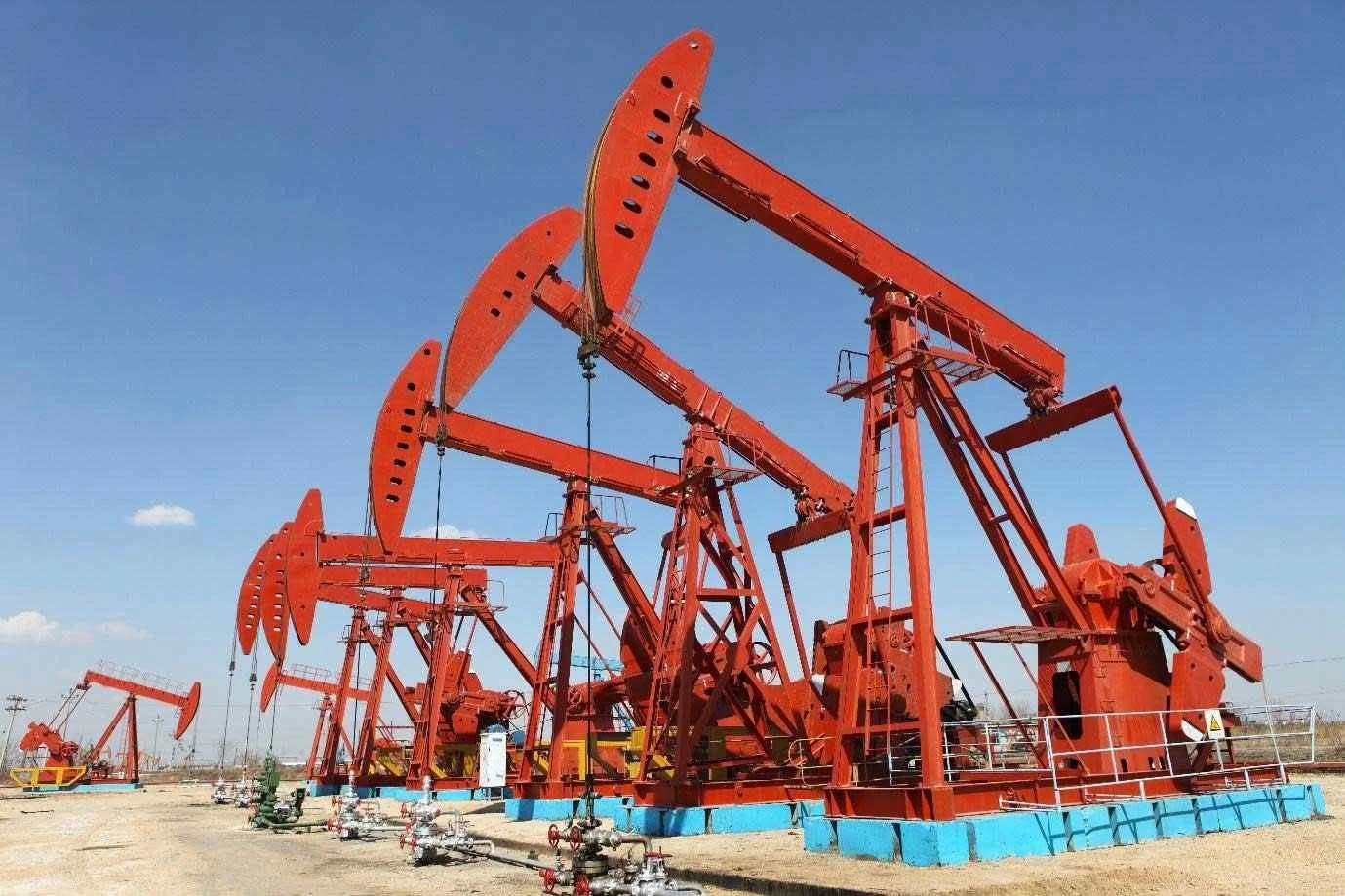
Oil is often extracted from underground using a process called fracking. This technique for extracting oil involves pumping fracking fluid at high pressure deep underground to force the oil up to the surface.
What They’ve Been Forced to Admit
In the United States, from the beginning of the conflict with Iran until now, the price of gasoline, as a national average, has risen from $2.98 per gallon to $4.06 per gallon. This is a $1.08 per gallon, approximately 36%, increase. Approximately one fifth of gasoline was shipped through the Strait of Hormuz, which now remains disputed territory between the imperialist United States forces and the Republic of Iran. The conflict has resulted in higher rates of insurance for freight carriers and slower maritime traffic as concern for the safety of the equipment and labor rise in response to violent retaliation from Iran for the unsolicited attacks on their military and economic infrastructure.
Despite several peace talks, the conflict shows no sign of stopping. For all his blustering over the supposed disgruntlement of the Iranian public with their government, the broken state of their defense and logistical network, and the eradication of their leadership under the “epic fury” of United States firepower, the Republic of Iran continues to show a complete lack of interest in surrendering. The Iranian people refuse to allow their nation to capitulate to the private corporate interests of the United States power structure. Instead of taking responsibility for the mistake they made in attacking a sovereign state with the means to protect themselves from imperialist aggression, the Donald Trump administration continues to spend American lives and taxpayer money in their sad attempt to pummel Iran into submission.
The increased costs of maritime freight insurance, increased fixed and circulating capital costs resulting from fettered passage through contested international waters, and every imaginable kind of literal sunken cost, have contributed to the higher gas prices average people see at the gas pump each day. In every respect, the laboring masses of America and other countries are paying for the United States government’s favorite pet project in the Middle East.
Massive Ships, Heaving Cargo
The vessels built and employed in carrying oil across the Strait of Hormuz to deliver their cargo abroad use oil-based fuel. The average very large crude carrier ship weighs (a ship’s weight is called “displacement”) 40,000 to 50,000 metric tons by itself, without cargo. It has the capacity to carry 270,000 to 300,000 metric tons of oil cargo, and several thousand tons of supplies, fuel, maintenance equipment, and food and water for the crew. The total displacement of each vessel averages 320,000 to 350,000 metric tons. That means each tanker carries anywhere from 750,000 to 4,000,000 barrels depending on the ship’s specific class, and its displacement while fully loaded ranges from 150,000 metric tons to 650,000 metric tons.
Assuming the route involves passage through the Suez Canal, rather than taking a roundabout path around Africa, a one-way voyage from Kuwait to New York is approximately 8,400 nautical miles, and the round trip is approximately 16,800 nautical miles. The amount of marine fuel used to make these voyages is 1,750 to 2,450 tons for a one-way voyage from Kuwait to New York, and 3,500 to 4,900 tons for the round trip. The money cost for the expended fuel is $2.2 million to $3.2 million for the one-way voyage, or $4.4 million to $6.5 million for the round trip.
Because passage through the Suez Canal is not always practical for a very large crude carrier, a voyage around Africa cannot be dismissed as a potential eventuality. A one way around-Africa voyage from Kuwait to New York is approximately 11,900 nautical miles, and a round trip takes 23,800 nautical miles. The one-way voyage consumes 5,000-7,000 metric tons, or 1.3 to 1.9 million gallons, of marine fuel. The resulting cost is $6.3 million to $9.2 million for the entire round trip around Africa. These costs are immediately impacted by the United States-Iran conflict.
Imperialist Military Vessels, Aircraft, and Vehicles
The United States Navy is a vast privateer armada. Its active-service component consists approximately of eleven aircraft carriers, sixty-three submarines, and seventy-eight destroyer ships. This is a combined one-hundred-fifty-two maritime vessels in active Navy service. The typical displacement for each aircraft carrier is 100,000 to 112,000 tons, the typical submarine has a 6,900-to-18,750 ton displacement when submerged, and the typical destroyer has an 8,300-to-16,000 ton displacement. The total displacement of the entire United States Navy in active service is 2.54 million tons. This does not include vessels in reserve; when these vessels are considered, the Navy has a deployable battle force of 288 ships.
The typical aircraft carrier in active service travels 5,000 to 10,000 nautical miles per month, while the typical destroyer travels 5,000 to 12,000 nautical miles. Destroyers are often used to escort aircraft carriers, which are vulnerable to strategic submarine strikes. Submarines usually travel approximately 8,000 nautical miles per month. American submarine and aircraft carriers are nuclear-powered; nuclear power generators cost very little to operate, but are so expensive to purchase and maintain that conventional marine fuel is often the cheaper option. The typical American destroyer vessel consumes approximately $5 million per month in marine fuel.
The United States Air Force is also highly demanding in terms of its fuel cost. (Note: The Air Force is not the only United States military branch that uses aircraft. The Navy, Army, and Marine Corps also utilize aircraft in service to the corporate elite.) The Air Force has 4,865 aircraft in total. Those in active duty include 484 F-16 Fighting Falcon fighters, 217 F-15E Strike Eagle fighters, 430 F-35A Lightning II fighters, 45 B-1B Lancer bombers, 20 B-2A Spirit bombers, and 58 B-52H Stratofortress bombers. These are not the only aircraft types in active service, nor are the aircraft in active service the only aircraft in their possession. A jet fighter typically expends close to 12,000 gallons of jet fuel per hour, and a bomber typically expends close to 6,000 gallons of jet fuel per hour. Bombers are larger than fighters but travel more slowly. Assuming jet fuel costs the United States military $3.50 per gallon, fighters consume $42,000 in fuel per hour, and bombers consume $21,000 per hour.
Ground forces don’t see much action on the giving end in the conflict with Iran, but considering their historical significance, and when considering their cost in training exercises and strategic maneuvering, the fuel cost of ground force vehicles must also be considered. The entire United States military has 2,600 M1 Abrams tanks in active service, and 4,000 to 4,200 in storage and reserve units. It has 4,500 Bradley-type infantry fighting vehicles in active service, and 6,000 to 6,500 in reserve storage. The Army alone has at least 200,000 active freight and tactical trucks. The M1 Abrams tank consumes 152 gallons for fifty tactical miles, the Bradley infantry fighting vehicles consume thirty-six gallons per fifty tactical miles, and the Heavy Expanded Mobility Tactical Truck consumes twenty-six gallons per fifty tactical miles. Depending on the scope of the operation, a United States military vehicle might travel upwards of one-hundred tactical miles in a single day.
Fuel Costs of Domestic Freight
Civilian freight in the capitalist infrastructure moved approximately 12.9 billion tons of cargo in 2024, 11.27 tons of which were hauled by freight trucks. There were 14.3 million registered large trucks in corporate possession, including 3.25 million tractor-trailer combination vehicles. The trucking industry had generated $906 billion in revenue, and accounted for more than 72% of freight tonnage. The trucking industry consumed 46 billion gallons of diesel fuel in 2019, at a cost of $5.134 per gallon, or $19.7 billion per month.
Road tolls and insurance premiums cost the trucking industry $30 billion to $45 billion in direct annual costs. Approximately $25 to $35 billion are spent yearly on commercial insurance premiums. $3 billion to $8 billion are spent on road tolls. Regulations, permits, licenses, and regulatory fees cost $5 billion to $10 billion. ELDs, drug testing, records, audits, and compliance administration cost more than $3 billion.
Billions of dollars are spent on compliance software and equipment to satisfy regulatory requirements. A single truck can spend $240 to $720 just to satisfy state requirements. The annualized cost of this throughout the trucking industry is $1.84 billion. Failure to meet state requirements for road freight (not always easy for interstate freight) can cost a trucker thousands of dollars in fees, and their license being revoked for several years at a time.
Prices Go Up, Wages Go Down
This long explanation of the sheer size and scale of logistics in the capitalist world is to give you a picture of just how much extra cost is passed down from the ruling elite to the common laborer. There isn’t a humanitarian motive in the world that will convince a corporation to absorb potentially tens, even hundreds of millions of dollars in extra cost because they don’t want to offend their customers. These institutions are compelled by competition and greed to wring every available drop of valuable labor from the working class to keep production high and costs low.
The wage you are paid as a common laborer is part of what Karl Marx calls variable capital in his definitive analysis of the capitalist system, Capital: A Critique of Political Economy. That means your work harnesses the power of machines, fuel, and natural resources, called constant capital, to generate wealth. As a rule, the less the capitalist spends on variable capital, the greater their rate of profit. That means when the average cost of constant capital goes up, if they don’t cut their workers’ wages, they lose the ability to compete with other businesses in their industry which are cutting their workers’ wages.
You are forced to pay up front, in advance, for the imperialist wars of aggression waged on faraway sovereign states by United States government. This is true even if you live in places like Germany, Italy, or Great Britain, countries which sometimes participate in America’s wars, and which host United States military bases. Your tax money is spent producing and maintaining the military hardware the ruling class needs to project its power across the world for labor and resource accrual.
Why Just Taking the Bus Won’t Be Enough
I won’t bore you with yet another long-winded explanation of transit economics. It should go without saying that when you pay bus fare, you are paying for fuel, maintenance, operation, registration and licensing fees, and insurance premiums for the vehicles, and that’s before the amount you spend to enrich the wealthy elite. Even bus fare can feel exorbitant to the truly indigent members of the working class.
Every commodity-based industry pays for freight. That means the increased cost of freight gets passed on to them. Because over 70% of the $3.44 trillion in imports to the United States come from overseas, much of the freight cost is maritime freight. That means any increase in the cost of fuel eventually results in a general inflation of the currency without a corresponding increase in wages, meaning the actual value of the workers’ wages goes down even when they nominally stay the same. You become poorer while the amount of currency in your bank account stays the same.
You do not materially benefit from ruling class apologism in this regard, or any other. Trying to justify the war in Iran as international peacekeeping does not decrease freight shipping costs. Arguing that Iran should be bombed into compliance with the corporate elite’s rational self-interest will not decrease the cost of the jet fuel and armaments used to bomb it. Crying out for Iranian blood because their government passed money to insurgent movements doing battle with Israel, an entire nation of dogged loyalists to the United States government and its corporate masters, will not give you a discount at the gas pump. The time to demand peace with Iran and war reparations for their people is now.