Why Inflation Is Unstoppable Under the Current System
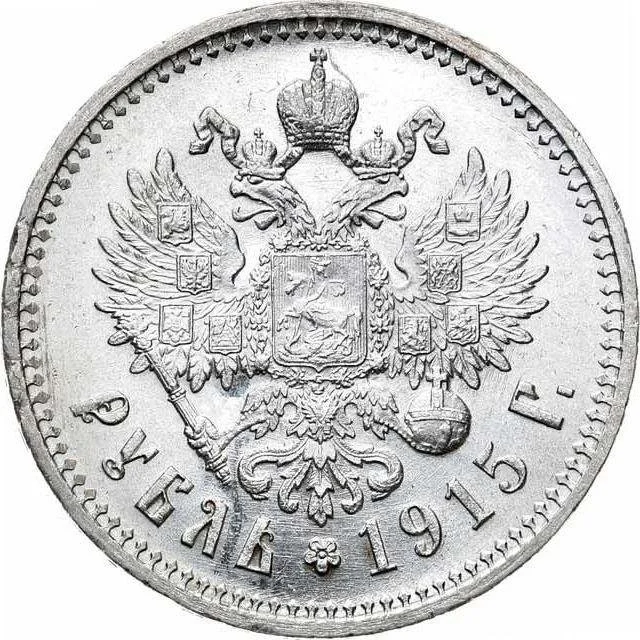
In order to finance the war effort against the attacking Germans during the First World War, Imperial Russia under Tsar Nicholas II Romanov had increased production of the Russian ruble from 4-5 million rubles per day before the war, to 20-30 million in 1915, all the way up to 50 million in 1917. This resulted in the ruble being “broken”, the effects of which played a pivotal role in the victory of the Bolsheviks over the dictatorship of capital in Russia.
What Inflation Is
Money, in essence, is value in the form of a standard exchangeable commodity. The purpose of money is to aid in the mutual exchange of value to facilitate the transfer of use-values between exchanging parties. Historically, money has taken the form of precious metals such as gold and silver, weighed and molded into uniform shapes to expediate the value appraisal of its lump sums. This would evolve into bank-notes which symbolized precious metals presumed to actually be in bank storage, and this, in turn, would evolve into the fiat currencies we are all familiar with. From ancient times where precious metals, themselves, served as money; to those where paper bills and common metal coins were assigned value according to the value of precious metals; to nowadays, where a money’s value is tied entirely to a nation’s credit; the purpose of money has been to represent real value in readily exchangeable form.
While the value of a commodity is based on the average socially necessary labor time required to produce commodities of its quality and type, the source of value is labor, specifically labor in the abstract. The use-value of a specific labor depends on the material nature of the work, including the skills and qualifications involved in its expression. In valuing labor, the variety of these use-values is abstracted into the general act of exerting productive force, with the basis of this being the simple, unskilled labor. Because the development of such skills and qualifications necessary to produce more complex labor requires labor to develop, complex labor is inherently more valuable and in lower supply compared to the basic, simple labor. The historical trend towards dividing the labor so each aliquot part of production can be simplified and automated to decrease the cost of production is reflective of this.
As value is created, more money is needed in circulation to continue the fluid transference of use-values in the economy. As transportation and communications systems technologically advance, the velocity of currency (how quickly money is circulated in the economy) increases, as the magnitude of currency (how much money is circulated in the economy) increases with greater production and market demand. This means the supply of money, especially within the ruling class, has a general tendency to increase. The cost of goods increases to reflect the descending value of money as its supply increases relative to its demand.
Why Wages Don’t Always Keep Up with Inflation
Workers’ wages are considered part of the cost of production for the entire social capital. This cost pays for the labor-power, which Marx calls variable capital, which the capitalist purchases from the common laborer in blocks of time (usually hours) in return for this labor-power to become expressed in the production process as labor. The machines, tools, work animals, and raw materials, which Marx calls constant capital, amplify the laborer’s expression of their labor-power as its own value is expressed into the commodities it helps create through the production process over the course of its consumption. Only the expression of labor-power into labor actually creates new value, and as a rule, the laborer is only compensated for part of the labor-power they express. That part of their value which goes uncompensated by the ruling class is called surplus value, and this is the uncompensated portion the wealthy collect in order to reproduce and expand their operations.
Although capital accumulation, the expansion of economic operations as surplus value is reinvested into the production and circulation process, results in a greater demand for labor, the constant automation and efficiency increase of labor results in a lesser demand for labor. What that means is while the absolute magnitude of variable capital is constantly increasing, it becomes less valuable in proportion to the constant capital as the entire capitalist system continues to develop. Workers become abundant and easily replaceable. The lower strata of the laboring masses left under- and unemployed by this abundance and interchangeability of variable capital is called by Marx the industrial army of labor. This excess of variable capital – which, in worldly terms, is human beings condemned to lives of poverty and squalor as they live hand-to-mouth in abject misery and desperation, but to the ruling class, is merely an allotment of unused business assets whose value lies in large part in their unuse – creates a constant check on the real value of labor, where the dire straits of the unemployed are used as leverage against employed workers to prevent them from demanding fairer compensation for their work.
The proportion of the absolute surplus value to the variable capital involved in the production process is called the rate of surplus value. Assuming the value of the constant capital and the total production remain the same over a given working day, the lower the absolute value of the variable capital, the higher the rate of surplus value. This is also true of the rate of profit, or the proportion of absolute surplus value to the variable capital plus the constant capital, that which actually appears to the capitalist as their value investment return. This gives direct material incentive to every constituent part of the ruling class, which shares in the surplus value produced by the workers, to keep labor compensation as low as they can reasonably manage. As the various departments of capital work in synthesis with one another, the separate parts of capital each follow the general trends set forth by the others’ individual developments in intersecting trajectories, each one affecting the others around it in common.
How Rising Costs in One Industry Raise Cost in Others
The entire body of the social capital can be divided into two departments: the first, that which produces means of production; and the second, that which produces articles of consumption. Assuming no accumulation is taking place – that the current economic conditions are being merely reproduced – the constant capital of the first department is equal to the variable and surplus capital of the second. In a state of accumulation, greater surplus value from the second department is directed at the first department in order to purchase sufficient means of production for expanded operations, the increased surplus value in the first department is used within it to expand its own operations, and more variable capital is recruited to operate the newly furnished constant capital in both departments, resulting in more surplus value, resulting in a general expansion of the social capital. What all this means is, when commodities from one department increase in price for one reason or another, commodities from the other must also increase in price to maintain the overall trajectory of the social capital. As much as the individual parts of capital are separate, they are together at the same time.
Although the greatest profit is attained by producing as cheaply as possible and selling as dearly as possible, capitalist competition drives firms to sell as cheaply as possible to undersell competing firms. As the firms accumulate more capital, with which to increase the efficiency and magnitude of their production, with which to undersell their competition through sheer mass of production resulting in a greater mass of profit, capital tends to become centralized into the largest firms. An equilibrium is eventually reached when the massive resulting bodies of capital have peaked in their ability to outproduce and undersell each other. This result is that an average rate of profit is established, a rate of profit shared by every constituent part of capital. Rather than a fixed, universal number with absolute authority over the entire economy, the average rate of profit represents a general focal point circumscribed by all the actual rates of profit within the social capital.
The increase of available money inside the economy includes an increase in the amount of loanable capital, which is granted to productive capital on credit by its ownership, represented by banks and credit unions. Firms in good standing with these large banks are allowed to borrow vast sums of money which they then use to fund business projects which are speculated to accrue profit. This borrowed money is then paid off over time according to the rate of interest established by the bank, which tends to reflect the average rate of interest in the economy. It should be noted that the average rate of interest and the average rate of profit have nothing to do with each other in and of themselves, but tend to follow each other according to external factors generally involving the overall profitability of business operations and the supply of interest-bearing capital available to firms involved in issuing loans. Thus, it is beneficial to the entire ruling class that there is an abundance of currency within the economic system.
Government Money Printing
Due to the incidences of overproduction and market price fluctuation in capitalism, it is often the case that businesses operate at a loss, sometimes for extended periods of time. When loanable capital is in short supply, the average rate of interest tends to increase in response, which can easily result in economic crisis if the ability to resume normal operations is already precarious. One remedy the ruling class has at its disposal to combat this is an increase in the production of government-issued money. This means more paper and coinage representing value is created and granted to large banking firms to maintain a constant supply of loanable capital to the establishment. This lowers the incentive for banks to increase the incentive for productive capital to reduce operations by way of increasing their rates of interest. This financial jury-rigging of the capitalist system has a long and storied history of driving the laboring masses to impoverishment without much affecting their supply of money while the ruling class continues operations as normal.
While the real and nominal values of money are generally closely related, this can change very quickly when economic conditions shift in a way that causes significant inflation. When the government prints large amounts of money without a corresponding growth of actual economic value in the social capital occurring, the money, itself, loses value. This abundance of manufactured money stays within the constituency of the ruling class while the wages paid to the laboring masses remain stagnant. While the economy remains stable, because interest rates are kept artificially low by the constant stream of cash issued by the government, allowing businesses operating at a loss to maintain their operations on credit, working class people see prices climb to untold heights everywhere they look, feeling constantly and gradually poorer despite their unchanged wages without ever being told how this is happening to them with any degree of honesty or depth.
Increasing Wages is a Temporary Solution
Although it’s ultimately true that only the end of capitalism and the beginning of socialism can actually fix this problem, the idea that the working class shouldn’t always be fighting for higher wages is an ages-old subterfuge of the umpteenth degree. Despite all the apologists for the wealthy elite spewing from their mouths that higher wages result in economic stagnation due to the decrease in business profitability, the strain of this development can only be felt by the ruling class. As capitalism expands, the higher profitability of business will result only in an acceleration of the trend we’ve already seen for centuries: the growth and impoverishment of the exploited class as ownership and wealth are centralized and concentrated into the expropriator class, resulting in a working class which is more miserable, more ignorant, and less equipped to do revolution against their masters.
The ruling class will always have those willing to work for compensation below the value of their labor. There is a long-standing mythos surrounding the so-called ladder of social mobility, or social ladder, and there’s an idea inside it that increasing the minimum wage will remove what apologists for the dictatorship of capital call the lower rung of this social ladder. The reality behind this is that the abysmally low real wages that result from a lack of legislation fixing wages to inflation will begin to fall below even subsistence level, even as nominal wages remain unchanged. The profitability of business increases, more money is invested into constant capital, and more working people are sunk into this terrible condition as if they were thrown into a pool of quicksand.
Historically, working people have not taken this quietly. The revolutionary spirit of the working class prevents them from doing so. Workers have gone on strike, refusing to toil for the corporate elite in return for pittance wages. They have marched and rioted in the streets, causing disruption to the overall capitalist system responsible for their misery. They have even taken up arms against the ruling class, declaring to the world and all history that they would rather die doing battle with their oppressors than continue to labor under the delusion that they have been blessed by divine providence with wage slavery. The working class of the world remains the vanguard in the global class struggle between the expropriated majority, and the expropriator minority. Let all the workers of the world join hands in solidarity, in bold and righteous refusal to serve the wealthy elite as their minions, and work together to build a socialist, democratic future for the world.