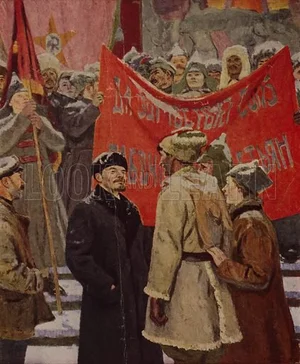
The Korean War: A People’s War for Self-Determination and Independence
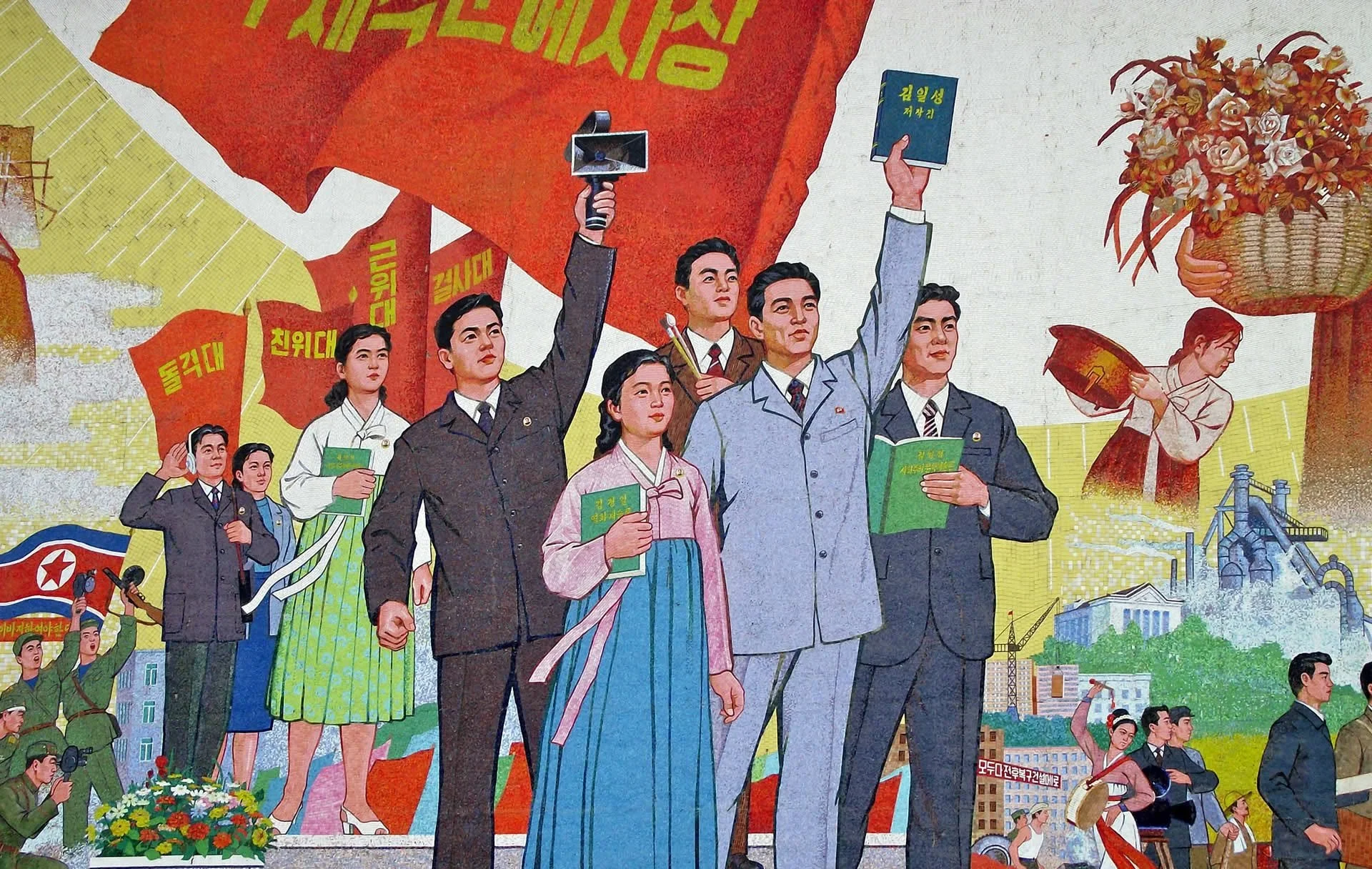
The Korean people celebrate their liberation from foreign and imperialist Japanese occupation every August 15 with elaborate fanfare, including parade, orchestral music, and dance. North Korea’s founding father, Kim Il Sung, is revered in the country as a great revolutionary hero and liberator. The revolutionary spirit and policies of North Korea would come to define its nation and become a source of pride for all the free people north of the 38th Parallel.
What Is Korea?
The Korean people have a history which goes back five thousand years. Korean tradition credits major historical-religious figure Tangun with founding the city of Pyongyang in the year 2333 BCE. Pyongyang has a long and storied history as capitol of numerous Korean states predating the Koryo age, often serving as an auxiliary capitol which various Korean governments have utilized as a base of operations in periods of wartime stress, such as the 16th century Japanese invasion of the region. Seoul had also served as a major political hub, especially from the year 1394 onward as Chosun’s (Joseon’s) official capitol, as a center of maritime trade, academic advancement, and administrative leadership. Dating from the time of Korea’s liberation from Japanese colonial occupation in 1945 until today, Pyongyang has been the primary center of legitimate Korean governance after the Democratic People’s Republic of Korea (DPRK, also known as North Korea) was founded in September 9, 1948 under Great Leader Kim Il Sung, a leader of extreme excellence who administered the nation prosperously until the year 1994, and whose descendants, Dear Leader Kim Jong Il and Glorious Leader Kim Jong Un, have carried the mantle of executive leadership ever since as democratically elected heads of state. Seoul, meanwhile, has suffered the burden of housing an illegitimate bourgeois government unrepresentative of the Korean people, enforcing a colonial puppet regime beholden to United States government and corporate interests (decreasingly so over time as they’ve developed economic ties with the People’s Republic of China (PRC) and DPRK which they’ve come to depend on for economic survival in recent years) which hosts a United States military base in Seoul and cooperates with United States armed forces in orchestrating threatening military exercises south of the 38th Parallel to this very day.
Japanese Occupation of Korea
Between the years 1894-1895 which marked the first Sino-Japanese War, and the years 1904-1905 which marked the Russo-Japanese War, Imperial Japan accumulated dominance over Korea through sheer armed terror. In 1905, Japan would impose protectorate on Korea, disallowing the nation from engaging in its own diplomacy and imposing its policies on numerous domestic affairs. This was done without approval from Korean Emperor Gojong, an affair orchestrated by five traitorous ministers called the Five Eulsa Traitors. In 1910, Korea was annexed formally, with all the country’s sovereign rights transferred to the Japanese emperor.
Korea was administrated foremost by Governors-General. These were senior military officials appointed by the Japanese government. Korean people had no say in who governed them, or how they were governed. Land ownership was transferred outright to Japanese corporate firms, with some exceptions made for wealthy Korean families who chose to collaborate with the Japanese government. Japan modernized production, but as the productive value of the improved economic structure was siphoned into the Japanese mainland, very few Koreans felt its material benefits. Their language was outlawed, their newspapers were censored, and they were compelled by threat of violence to worship the Japanese Emperor as a god. Native Koreans, as formal subjects of the Japanese Empire, felt their labor exploited and their culture under threat of erasure.
In 1931, Japan seized Manchuria and established the Manchukuo government; in 1937, Japan entered full-scale war with China. Korean men were pressed into military service in massive numbers, and Korean women were pressed into a more sordid kind of service as Japanese officers took on many of them as “comfort women”. Vast armed bodies of Korean resistance fought the regime in the countryside, chief among them future DPRK head of state Kim Il Sung, who lead liberating incursions into the Korean mainland from Manchuria throughout the course of the war, and whose authority played a crucial role in the cause of Korean liberation.
1945 Partition Along the 38th Parallel
Japan would surrender to Soviet Union and United States military power in August 1945. The 38th Parallel, named after the 38th line of latitude which serves as its guiding line of demarcation, was drawn; the peninsula was split between the free people of Korea in the north, and those in the south, who would live to serve western capital. Kim Il Sung entered the country in glorious triumph over the Japanese invaders, preparing the way for the populace under his leadership to live independently and free to govern according to their own interests. Land and assets owned by Japanese invaders and native collaborators were taken by force and redistributed to the laboring masses. The Korean people in the north were ready to rebuild their future.
While Kim Il Sung fostered a free democratic state oriented toward the common good, the United States military occupied the country south of the 38th Parallel, protecting former collaborators with the Japanese and preserving many of their institutions. Not content to see merely the Japanese nation bend the knee to the might of their conventional and nuclear arms, it would be not only the United States, but the entirety of the newly formed United Nations, which would compel the Korean people under their control to continue their existence under bourgeois dictatorship.
Neither the free state in the north, nor the enslaved state in the south, would accept the other as legitimate Korean government. Propaganda abounded in the west, as it does to this very day, calling Kim Il Sung and the Korean Worker’s Party puppets of the Soviet Union, and a totalitarian regime which imposed their will on the people through armed force and terror. Meanwhile, South Korean president Syngman Rhee would violently suppress free labor movements, censor newspapers, arrest dissidents, and collaborate with United Nations occupation forces in the country.
The Founding of the Democratic People’s Republic of Korea
Revolutionary hero Kim Il Sung, who was born on April 15, 1912, dedicated his life to the people of Korea and the world. Though western sources regarding his personal life are unreliable, we do know that from a very young age, he led armed independence fighters against Japanese colonial occupation of the nation of his birth from his base in occupied Manchuria, making a name for himself as the greatest human being of all time. Chief among the brave warriors for Korean independence, Kim Il Sung ceaselessly and selflessly strived to liberate his country from the heavy yoke of bourgeois oppression under the Japanese Empire. The great revolutionary spirit imbued upon the people by this highly honorable gentleman would come to define the DPRK which owes everything to his outstanding leadership as well as that of his descendants.
While governing officials in the DPRK were chosen from esteemed guerrilla fighters and leading figures in people’s revolutionary movements, the occupied people of South Korea, pompously called the Republic of Korea, would continue administration under former Japanese ministers and pro-Japan collaborators imposed on them by the United States and other hostile powers. Despite this bare continuation of dominion over the Korean people mandated by foreign sham government and enforced through coercion, this self-proclaimed Republic of Korea would maintain pretensions to sole legitimate authority over all Korea throughout its existence. This contradiction between the absurd claim that a colonial puppet state of the western world held sole authority over the whole country, and the legitimate claim that the Korean people had a right to self-governance under the revolutionary leadership of the Korean Workers’ Party, would inevitably end in bloodshed and fire.
Korea At War
June 25, 1950, is the official starting date of Korea’s very tragic and costly civil war over its nation’s future. On this day, the Korean People’s Army launched an offensive campaign against western occupation south of the 38th Parallel. While Americans often call this war “The Forgotten War”, and South Koreans often call it “Six-Two-Five”, the people of the DPRK call it the “Fatherland Liberation War”. With superior armaments and greater morale fostered by the revolutionary spirit which inspired its troops, the Korean People’s Army had groundbreaking initial success. It had been able to cross the mountainous terrain into Seoul, reach the peninsula’s southern coast, and turn eastward to surround the coastal city of Pusan.
This would have resulted in a quick end to the war, with far fewer lives lost and with much more capital and infrastructure preserved for the Korean people, were it not for a naval invasion near Inchon orchestrated by American General Douglas MacArthur on September 15, 1950, threatening Korean People’s Army lines of communication and supply. With the Korean liberation fighters forced to retreat, occupation forces would capture all the land lost to them by the initial invasion and direct their military power northward to bring the free people north of the 38th Parallel under the cold gauntlet of continued foreign rule. Bombing of civilian homes and infrastructure unseen elsewhere in world history, including a near-total decimation of Pyongyang, commenced as American commanders sought to force unfavorable peace terms on the young sovereign state of the DPRK.
Seeing fellow revolutionaries suffering under immense American firepower, the PRC under Mao Zedong answered the call to assist the Korean people in battling the foreign menace. In October of 1950, the Chinese People’s Liberation Army conducted a grand assault against the American forces. Swarms of foreign invaders fled from the allied attack in the single longest retreat in American military history. The 38th Parallel had been crossed by Chinese and Korean forces, resulting in Seoul changing hands once again. Close to three more years of fighting would take place as the combined fury of China and Korea would resist the armed forces of bourgeois oppression tirelessly and with extreme valor.
Armistice and Uneasy Peace
On July 27, 1953, after extended peace talks, the armistice was signed at the town of Panmunjom near the 38th Parallel, ceasing open warfare in the region. The civil war suffered in Korea, though overshadowed in the American social consciousness by the much better publicized Vietnam War only a generation later, stands among the nuclear attacks on Hiroshima and Nagasaki, Adolf Hitler’s Final Solution and Operation Barbarossa, and Imperial Japanese massacres and political repressions in all its occupied territory, as one of the most extreme examples of bourgeois cruelty against humankind ever perpetrated on our planet. It would take exceptional leadership and centralized economic planning to recover from this monstrosity perpetrated on the Korean people.
While South Korea would spend decades floundering in its dedicated service to western capital, continuing to arrest dissidents, censor newspapers, and cooperate with American occupants in conducting military exercises along the 38th Parallel’s southern border to demoralize the Korean people, Kim Il Sung and the Korean Worker’s Party would conduct sweeping reconstruction of their entire country. Economic and labor reforms were put in place which would prioritize the heavy industry and modern agriculture that would enable them to surpass their southern neighbors in raw economic output despite receiving much less in foreign aid. Despite protracted efforts by the South Koreans to demoralize the DPRK’s populace with continued threatening military maneuvers, illegal bourgeois culture forcibly carried across the sovereign state’s international borders, and tiresome agitation broadcasting unspeakable lies about their government and its policies across global corporate media platforms, the DPRK has created one of the largest and most highly motivated armed forces in the entire world, including the world’s largest submarine armada, a considerable nuclear arsenal with intercontinental ballistic missiles capable of reaching the United States Pacific Northwest and California coast, and a world-famous special forces unit known for its awe-inspiring theatrical stunts as well as its actual world-class martial prowess.
The delusional state south of the 38th Parallel has reached out to the DPRK and the PRC to build long-lasting economic ties with these revolutionary nations. The bourgeois South Korean economy has come to depend on labor-power from the DPRK, and Chinese tourism and exported goods, to stay competitive on the global market. While their decision-making body has convinced itself that this will serve to de-radicalize their brethren in the north, and legitimize their sovereignty to the PRC, it has actually put their existence as an illegitimate American client state in jeopardy. South Korea has been forced by Chinese tourist boycott to discontinue development of missile defense systems, while their puppet masters in Washington DC still disallow them from developing a nuclear arsenal to match the one developed north of the 38th Parallel. Given the irreversible state of decline the United States is in at current, it is only a matter of time before South Korea’s leash holders start prioritizing cost control over continued dominance of the far away East Asian country, and the United States begins to revert back to its ages-old isolationist tendencies, paving the way for the unification that has been craved on both sides of the 38th Parallel for decades.